Platinum and palladium are precious metals with unique properties that make them indispensable in many technological applications, particularly autocatalysts. As minerals, both are quite rare and are mostly found in just a few regions around the world. One of them stretches across the northern flank of the Beartooth Mountains in Montana, USA.
The area, geologically known as the Stillwater complex, hosts two underground mines, Stillwater and East Boulder – although “underground” may sound slightly misleading as the mining assets lie more than 2,700 meters above sea level in the mountains.
The mines are owned and run by the Sibanye-Stillwater Group, one of the world’s largest producers of platinum and palladium. The Stillwater mine has been in operation for almost 40 years and produces some 250–300 koz, or about 7,000–8,500 kg, of platinum and palladium concentrate yearly.
Since July of 2022, Sibanye has been using Robit’s consumables for jumbo and bolting drilling at the Stillwater Mine. That was the result of a fruitful cooperation between Robit and their distributor, NISS (Nasco Industrial Services & Supply), headquartered in Kellogg, Idaho. That cooperation turned out to be mutually beneficial.
“We had been looking for a reliable distributor who could help improve our market penetration for the mining sector in Southwest US. We hired a consultant for the job, and one of the largest US mining companies recommended NISS to Robit”, says Robit Sales Engineer Leif Olmstead.
“NISS had great access to mines through selling ground support products. Previously, they hadn’t dealt in drilling consumables, but this became a win-win situation: we gained a better foothold in a new market, and NISS could expand their product portfolio”, Leif explains.
The first customer Robit won with NISS was the Stillwater Mine in Montana. Stillwater is a large-scale operation that uses the “ramp and fill” method, where the excavated spaces are filled again with waste rock and tailings once the ore has been extracted. For jumbo work, the mine uses 3,200 and 4,305 mm Robit drifter rods and 45 mm semi-ballistic S model bits; for bolting, R28-R28 M/M Hex Steel rods. Sibanye-Stillwater are happy with the supplied tools.
“We hear the rod lifetime has improved over the previous supplier, and the jumbo bits are faster and have fewer plugging issues,” says Leif.
Work at the Stillwater Mine won’t be ending anytime soon: the estimated life of the mine extends well into the 2050s. As for Robit and NISS, it has proved a promising start for their future endeavors together.
Picture: The Beartooth Mountains, just northeast of Yellowstone National Park, are part of the Greater Yellowstone Ecosystem.
Fingeo is a Finnish drilling and piling contractor with solid experience. They also carry out more extensive projects, including civil engineering. For drilling consumables, the company relies on the quality, reliability, and competitive price of domestic Robit.
Founded in 2008, Fingeo Oy is now part of the E.M. Pekkinen Oy group.
“Our goal has been to develop our operating methods and provide a high-quality overall service. Fingeo has traditionally been strong in drilling and piling contracting. In recent years, we have expanded our service offering to include extraction by wedging and blasting and rock reinforcement by shotcrete, grouting and bolting. “We now also offer comprehensive foundation work contracts, which makes it easier for the client as the same contractor takes responsibility for the work from start to finish. We have the flexibility to handle smaller projects as well as larger ones. Our extensive experience in soil and rock drilling, together with other civil engineering professionals, ensures an overall sustainable contract and smooth project management,” says Veli-Antti Pekkinen, Project Manager at Fingeo Oy.
Construction continues to be strong in the Helsinki region
While Fingeo’s operations mainly focus on the Helsinki metropolitan area, several projects, particularly demanding piling contracts for industrial and bridge projects, are carried out throughout the country.
“In the future, we will increasingly offer our services in different parts of the country, especially in challenging projects and large turnkey contracts. We have plenty of work for the rest of the year as construction in the capital region continues to be strong on the ongoing sites. As for new projects, the future is not quite as clear,” says supervisor Jukka Jääskeläinen.
Wide variety of work methods, skilled staff
For drilling and anchoring, Fingeo uses a large variety of methods and a wide range of special equipment.
“Our pipe piling projects range from a few piles to construction sites with several thousand piles. Tensile anchoring is used, for example, in trench shoring to absorb tensile forces. Our areas of expertise also include specialities like offshore drilling from a raft and combi walls for trench support.”
“The backbone of our equipment consists of pipe piling and anchoring machines and drill rigs, of which we have about a dozen units. While the machinery is state-of-the-art, our motivated and highly skilled staff is key to successful projects. Our team has an excellent working atmosphere. Our minimal turnover rate speaks for that,” says Kai Jaakkola, supervisor.
Robit – the trusted partner for consumables
Drilling and piling is a consumable-intensive business. Fingeo’s main supplier in these applications is Robit, with its products manufactured domestically in Lempäälä.
“At the moment, we get practically all our wear parts from Robit: for quarrying, that includes rods and bits; for piling, we use their reamers, pilot bits, and DTH hammers. We appreciate their domestic manufacture and great customer service that ranges from sales to delivery to problem-solving. Robit actively develops technically advanced products, and the manufacturing quality is high. Their consumables allow us to drill further, resulting in cost savings. And while Robit’s products are definitely at the top of the market, they are also competitively priced. It’s quite a rare equation,” Jääskeläinen and Jaakkola say.
Thanks to its rich gold deposits, the Cajamarca region in northern Perú has been home to gold mines since the Inca times. One of the current mines is Cerro Corona, where Robit recently became the preferred supplier of DTH drill bits.
Cerro Corona mine, owned by Gold Fields Inc, is located on the eastern slope of the western Andes, some 80 km north of the regional capital of Cajamarca. The open pit mine is expected to produce some 2.1 Moz (about 60,000 kg) of gold and 407 kt of copper in concentrate over its 15-year mine life.
The rich gold deposit is hosted by diorite porphyry, an extremely hard rock embedded in limestone. MUR-WY, the drilling contractor at Cerro Corona, uses the so-called pre-splitting method, where closely spaced holes are drilled and lightly charged, causing fractures that isolate the gold-bearing rock from the surrounding rock mass. Successful pre-splitting requires very straight holes, and, as always, this should be achieved with optimal cost, penetration rate, and tool lifetime performance.
Robit believed their tools might improve productivity, so they contacted MUR-WY in 2021 to arrange test drillings for 5” DTH bits at Cerro Corona. Test drilling is typically a very hands-on type of work where you monitor and make adjustments on the spot with the contractor. However, the COVID pandemic complicated things.
“In 2021, access to the mine was heavily restricted, so we had to get creative with MUR-WY to follow up on the tests. We ended up monitoring the performance remotely through WhatsApp videos and messages”, says José Luis Cisneros, General Manager of Robit SAC.
Luckily the restrictions were eventually lifted, and Robit’s Regional Sales Manager, Martín Rodriguez, was able to revisit Cerro Corona and conclude the tests, which proved highly successful.
“On average, compared to the tools they had used, we reached 20 to 25% better yields with our DHD340 Flat Face Premium bits and 40 to 50% better with our D45 HD hammers.
“We detected several ways to improve productivity. Not only did Robit’s components perform better, but a key factor is also the service we can provide. We are now the preferred supplier for DTH consumables at Cerro Corona. There are still challenges to tackle, but we will work with our strategic partners from MRU-WY to articulate better ways to approach their needs and increase security regarding the project’s required logistics”, Martín says.
In the first half of the 20th century, the Norra Djurgårdsstaden district in Stockholm, Sweden, was a busy industrial center and port area with an oil port, a coal port, a free port, and even a seaplane base. Today, it is one of the largest urban development areas in Europe.
The Norra Djurgårdsstaden development project was kicked off in the early 2010s. The first 700 apartments were completed in 2012, and construction work is expected to continue well into the 2030s.
The overall plan includes construction work in five sub-areas in the district. One of them is Project Saltkajen in Södra Värtahamnen, where a new pier with an associated bridge will be constructed, and the existing quay will be rebuilt. The city of Stockholm signed the contract, worth SEK 610 million, with Skanska.
Foundation work for the project includes extensive pipe piling and sheet piling in demanding conditions: more than 500 SSAB RD pipe piles (711 mm and 508 mm) will be drilled and connected by welded interlocking sections, creating a continuous retaining wall against horizontal and vertical loads.
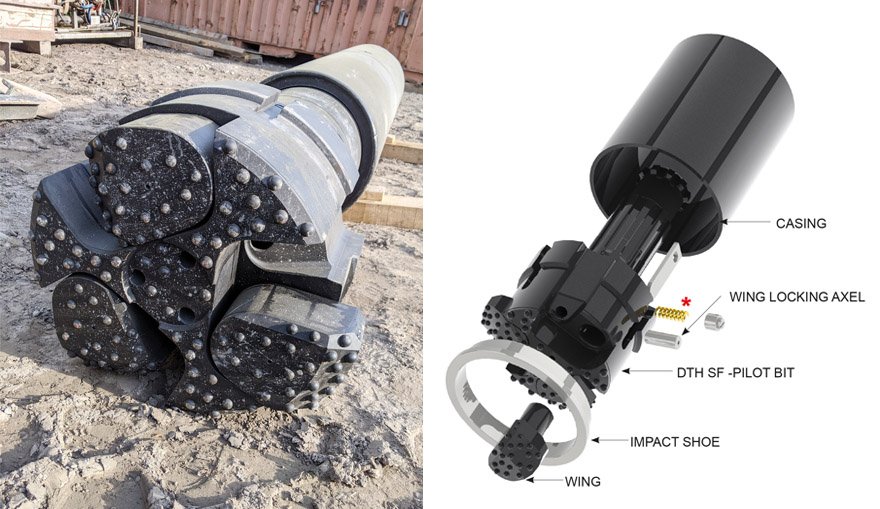
Skanska chose the Robit Steel Fist (SF) casing system to drill the RD piles. SF is a solid choice for all DTH applications where the casing is left in the ground. Skanska has successfully used it in previous projects, such as the Slussen reconstruction in Stockholm.
As construction continues, Norra Djurgårdsstaden is slowly transforming into a modern, environmentally friendly, sustainably built district with 12,000 homes and an estimated 35,000 new jobs. Värtahamnen will be home to some 5,000 people, and 20,000 will work there. With new walkways, shops, restaurants and nightlife, it will also be an inviting entry point for international visitors arriving in Stockholm by boat.
When developing products for use under several conditions, it is vital to consider the experiences of people using the products. In modern times, it is possible to simulate all sorts of conditions in a lab environment or using computer models. But these can often only give an indication of the product’s performance in the real world, whereas those working in the conditions set by said real world can tell you a lot more.
For the above reasons, Robit has a long tradition of working with its distributor partners and end-customers alike regarding product development. The end-users know their equipment and circumstances better than anyone, so they can often test new and existing products under true-to-life conditions. This way, one can ensure that the test results correspond to the products’ actual performance and durability capabilities.
Collaborating towards better efficiency
One of Robit’s long-term test partners is Stevin Rock, which operates a limestone quarry in the United Arab Emirates with a fleet of Down the Hole (DTH) machinery. They have been using Robit-manufactured DTH tools since 2016. Stevin Rock has been using the full suite of Robit’s drilling consumables, with a 4″ hammer as their workhorse of choice and adaptors, drill tubes, and 110 mm and 127 mm bits aiding the work.
The initial contract was made after Robit succeeded in the trials at the Stevin Rock quarry. Robit’s products triumphed with a longer life span and lower cost per meter than the competition at the time. While some alternatives provided a higher penetration rate, this benefit was trumped by the higher number of breakages it brought. They decided to go with Robit, which offered known products that provided conclusive and consistent high performance.
In the years since the initial contract, Robit has proven itself as the right choice with an excellent overall life span of products, a high level of service, and numerous supporting drill master visits. Indeed, these visits have been the core of the support and collaboration towards the customer. A Robit drill master has been visiting the site on support duties a couple of times a year to help Stevin Rock optimize their processes. In addition, Robit and their distributor partner DeltaCorp Global have conducted on-site practical and theoretical training sessions for the operators and mechanic teams on hammer assembly, preventative maintenance, bit wear, failure modes, and best drilling practices.
Robit always aims to find the best possible distributors for each region; the goal is to find those who understand the local market, culture, and general thinking. In DeltaCorp Global, Robit has one such winner. During the years, DeltaCorp has fostered a very close working relationship with Stevin Rock. This allows them to consistently offer timely and relevant support for the customer across their organization. DeltaCorp’s representatives conduct at least one visit each week to one of Stevin Rock’s three sites. The purpose of the visits ranges from stock deliveries to management meetings, where product quality and life span, as well as stock levels and forecasts, are assessed. While on-site, the representatives will also visit the drill rigs to receive direct feedback from the drill operators. On top of all that, the DeltaCorp representatives maintain constant communication with Stevin Rock’s site management, working swiftly in the event any concerns should be raised, such as a sudden need for urgent deliveries, an unforeseen breakage, or some other operational problem.
Thanks to continuous support, Stevin Rock has improved the results they get with their equipment even further. When the initial contract started in 2016, the average life span of a drill bit was 2,000 meters, with hammers reaching approximately 8,000 meters. With all the training given to the personnel to help them make the most out of their tools, the efforts to optimize the drilling processes, as well as the product improvements from Robit’s Engineering and Production teams that based on the customer’s feedback, the average bit life span has extended to 4,500 meters, with the hammers regularly exceeding 25,000 meters.
While the durability and solid performance of the drilling consumables first made Stevin Rock give Robit’s drilling tools a chance, they have since gotten several more reasons to stick to their decision. And while they have been periodically testing multiple competing products, they have not had a reason to switch.
“We have been using Robit’s products for years and cannot fault their performance or service. We run an open tender every two years, and they always come out on top. Robit’s commitment to collaboration and continuous improvement is their great strength. However, their local Distribution Partner is also strong; with their reliable supply chain management and quick reaction times, a solution is always available to us 24/7.”
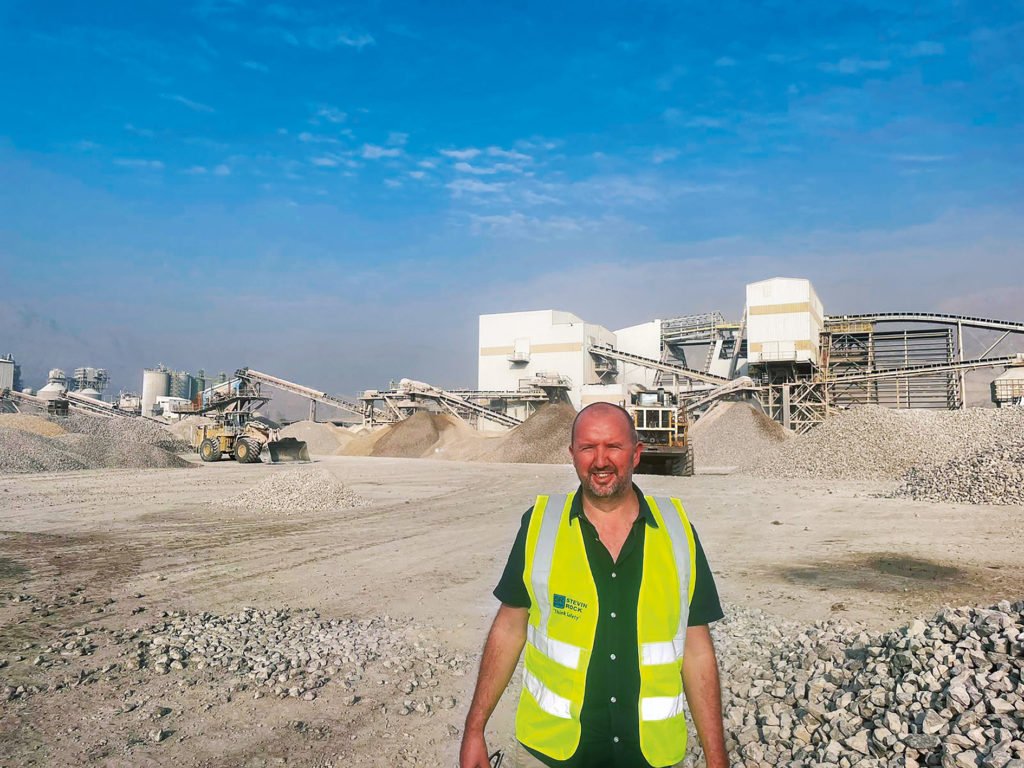
Stevin Rock Operations Manager Brian Howard under the Arabian sun.
Collaboration as the basis for product development
During their years working with Stevin Rock, Robit has been conducting numerous tests on many hammers and bits. All these tests have aimed to increase the life span of the products, as well as their performance, with minimal downtime and breakages so that the customer can reduce their drilling costs to the minimum. Tests carried out with customers have been at the heart of Robit’s product development process. Those trials have led to discoveries and breakthroughs that have guided the designs of their latest products, with the upcoming H-series hammers as a good reference point.
The new H-series hammers have been designed with performance and versatility as their guiding principles. The goal was to provide customers with a hammer range that they could utilize in different environments with minimal breakages and maximized utility for each operator’s circumstances. Customer feedback led Robit to develop a new modular design, offering increased flexibility and adaptability to varying conditions. With a few simple changes in the assembly of the hammer, the user can customize it for their needs; whether one wants to run them with improved productivity in mind or needs to be able to use a lower capacity compressor, the H-series hammers can be modeled to suit these requirements.
In practice, the modular design allows Robit to offer four hammers in one base design. The assemblies vary between high power and low volume, as well as foot valved and tubeless. Thus the following variations are available: high power with a foot valve, high power tubeless, low volume with a foot valve, and low volume tubeless. The high-power assembly offers high blow energy and air volume, resulting in a fast penetration rate and is suitable for deep-hole drilling. On the other hand, the low-volume assembly provides lower blow energy and air consumption, which are ideal for soft ground while keeping the hammer energy efficient.
As an example, Stevin Rock was looking for a faster drilling hammer to improve the potential productivity. Robit provided them with two assemblies of the new H-series models with differing internal arrangements to control the airflow, one with low air volume and the other with high air volume. These new hammers were to be tested against the tried-and-true D45 hammer from Robit’s older hammer range. The tests showed a considerable, consistent improvement across the board. The penetration rates went up in all tests, with the smallest increase at 14% and the most significant improvement at 30%. The highest penetration rate reached during the tests was 63.18 meters per hour. These results also correlated with those seen in earlier trials, ensuring the validity of the results.
With the new hammer range, Robit wants to bring more options to the market while still guaranteeing high performance. Because if one thing has become crystal clear during their collaboration with their customers, no two drill sites are the same. For this reason, they will make sure to let their customers’ and distribution partners’ voices be heard when developing new products and improving on the old ones.
This is an edited version of an article originally published in Global Mining Review, May 2023.
Imagine an offer where you, a mining company, are promised 5% cost savings on drilling consumables. If your supplier does not meet the promise, you only pay 20% of the going rate on said consumables. Would you be interested?
That is the core idea of the new RobitSave site audit program. Sales Director Kimmo Kangas explains the concept in more detail.
“Once we have identified and contacted a potential customer, our drillmaster visits their job site, surveys the relevant drilling tools they use, and documents their performance.
“The drillmaster does not make or recommend any changes in the setup; they merely observe and numerically records the performance: penetration rate in meters/minute, the lifetime of the tools, et cetera. Once they have collected enough data – in our pilot project, this took a week – they write a report. That concludes stage 1.
“In stage 2, we supply the customer with Robit tools for the same tasks. Up front, we charge 20% of the going rate of our products while promising 5% cost savings compared to their current supplier. And here’s the beautiful part for the customer: if we don’t reach those 5% savings – we will not charge a cent more”, Kimmo explains.
The RobitSave program was first piloted at the Kemi chromium mine – the only one of its kind in the European Union – run by Outokumpu Chrome. Kemi quarries some 3 million tons of rock yearly (two-thirds ore, one-third waste rock), and the expected remaining lifetime of the mine is 30–50 years.
The RobitSave test at Kemi covered cable bolting and production drilling consumables. As per the RobitSave contract, Robit charged 20% of the price of the goods upfront. In total, the tests at the Kemi mine took some two months.
“It went extremely well. We had all the results in black and white; our calculation chart showed undeniably that the cost-per-meter savings were way above the 5% we had promised. Our customer was positively surprised, and we could charge the remaining 80%”, Kimmo says.
The coming months and years will see the RobitSave site audit program gradually deployed across all of Robit’s markets.
Lima, the capital of Peru, is the second largest city in the Americas, with a population of just slightly under 10 million. Surprisingly, the megacity has only one metro line; the second line is now under construction. Once finished, it will make a huge impact on the city now troubled by congestion and pollution.
The project of building a metro network in Lima has been long and burdensome. The first plans were approved by the Peruvian government in 1974, but construction did not start until 1986. Due to various political disputes and economic issues, the project was stalled for several decades, until Line 1 finally started operations in 2012.
Plans for Metro Line 2 were initiated the same year. While Line 1 connects the northern and southern parts of the city, Line 2 will stretch from the eastern Ate district to the seaside city of Callao, Peru’s chief seaport, in the west. Construction work began in late 2014; it will include 27 stations and the excavation of some 27 km of tunnels.
Several of the stations will require some heavy foundation work. For stations 11 and 26, in the Breña district and Ate district respectively, the fortification work was awarded to Soletanche Bachy del Perú, a leading multinational company in civil and geotechnical engineering, and a strategic partner for Robit in Peru.
“We have worked from day one with Soletanche’s technical, commercial and engineering staff, advising on the different solution alternatives for carrying out the work”, says José Luis Cisneros, General Manager of Robit SAC.
“Since Soletanche has used our MU (Multi-use) Down the Hole systems in the past, we decided together to use Robit MU Tools for the project, including sizing equipment, pipes and accessories. Since early July 2022, we worked in close coordination with operations and logistics to meet the demanding deadlines.” Our DTH Sales Manager, Martín Rodríguez, played a key role in this coordination”.
Soletanche began micro-piling work for lateral support at Station 11 on July 20, using the Robit MU 114 system and Hyper 31 hammers.
“Supervised by Harold del Rosario, our Head of Geotechnical Assistance, we attended the operation to monitor the performance of our materials. We obtained excellent results in a very abrasive and challenging terrain”, José says.
August saw the beginning of micro-piling work for the structures of Station 11, with Robit pilots and ring bits from the MU 406 system and the HYPER 121 SD 12 hammer. Robit continued to provide assistance and monitor the performance and the drilling parameters. At the end of November, the fortification project of Station 11 of Lima Metro Line 2 was completed.
”Soletanche’s experience with our drilling tools has been very satisfactory, given the great performance of the MU 114 system, as well as the MU 406 system penetration rates achieved after the adjustments recommended by our drilling specialists. This project has further consolidated the relations between Robit and Soletanche for future projects”, José says.
As a whole, Lima Metro Line 2 is a gigantic, $5 billion project which will largely revolutionize mobility in the Lima Metropolitan area. Today, the typical trip from Ate to Callao is a two-hour ride; the metro line reduces the time to 45 minutes – a major improvement that will be enjoyed by more than 200 million passengers each year.
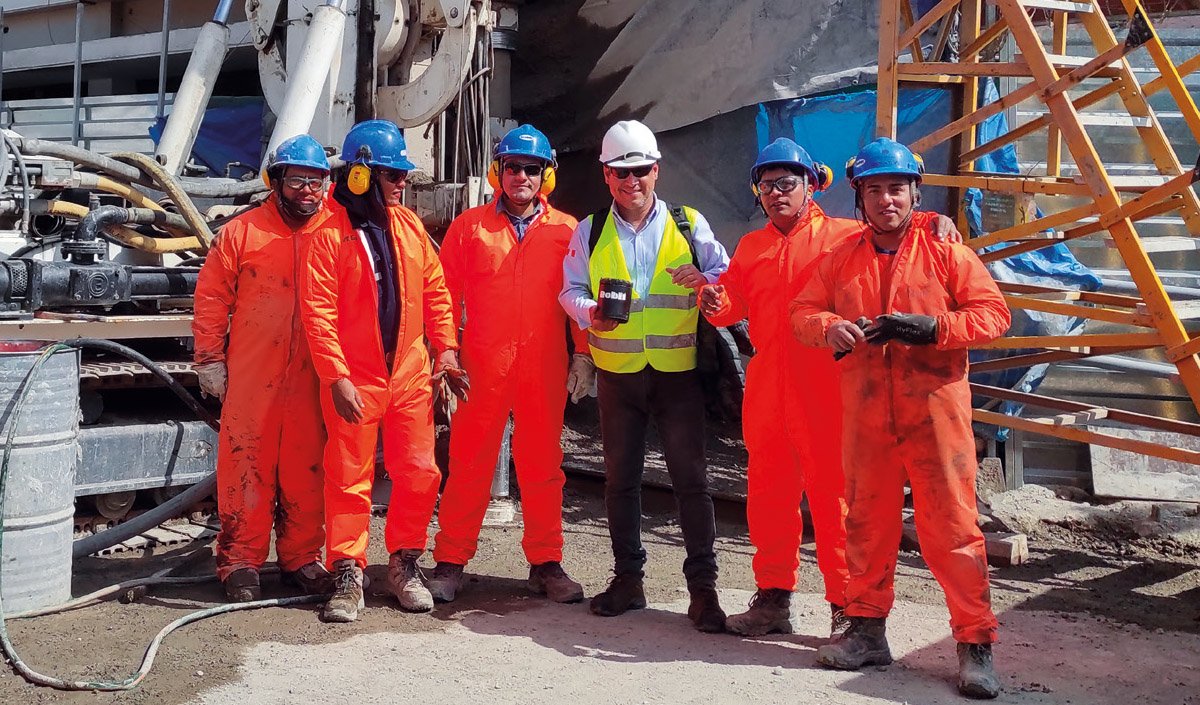
Picture: Harold Del Rosario (3rd from right) and the Soletanche team at Station 11.
Peñasquito Mine, located in the State of Zacatecas in Central Mexico, is the second-largest silver mine in the world and also a major producer of gold, lead, and zinc. The giant has been successfully served by a fresh partnership between a new dynamic distributor and Robit.
The scale of operation at Peñasquito is so massive that it’s more like a small city than just an open-pit mine, with its own airport, a 1,900-bed camp with full dining, laundry and recreational facilities, and even a radio station. Opened in 2010, it currently produces some 31 million ounces, or almost 900 tons, of silver per year.
Mining is a thriving industry in Mexico, with several distributors competing over their share of the drilling consumable market. Peñasquito Mine is owned by Newmont, the world’s largest gold mining corporation. This did not stop Marlous Supplies and Services, a newcomer in the field, from landing a distribution deal for Robit DTH tools with Newmont.
Marlous was founded in the spring of 2020 by Martín Ocaño, who has an accomplished track record in the business.
“I have dedicated 24 years to the commercialization of products and services, in mining and public and private companies. For years I had been working on the idea of forming a company dedicated to supplying different products to the mining industry”, Martín says.
“Our key strength against the competition is that we focus completely on giving good attention and service to our clients, always covering their needs, interests and concerns, including after-sales. This has distinguished us and helped us enter and gain ground in the toughly competed mining market.”
In the search for a reliable supplier for drilling tools in their portfolio, Marlous decided the best option was Robit, given their experience and product quality. In the case of Newmont Peñasquito, Marlous was in the right place at the right time.
“Newmont’s main supplier of drilling tools was failing to deliver products in time. We had a similar product available, so we were able to help them out, and from then on we were allowed to start serious testing”, Martín recalls.
Currently, Marlous is supplying a major part of the DTH drilling tools used at Peñasquito. These include Robit D88 and WH4 hammers as well as QL80 and TD40 drill bits.
A key factor in their success at Peñasquito has been the technical personnel working on-site in close cooperation with the Newmont staff. This includes monthly meetings where the results of the previous month are analyzed and points of improvement can be identified.
“We are always open to feedback and encourage our customers to comment on any detail, anomaly or possible improvement. They appreciate it when their comments and observations are taken into account and implemented as soon as possible”, says Martín.
Still a young and small company, Marlous has already established a firm foothold in the Mexican mining sector. Growing steadily, the company is building on a balanced synergy between the quality of products and impeccable customer service.
Picture: The Marlous team, from left; Martín Tapia, Erik Coronado, Guadalupe Rivera, Ignacio Beltran, Carlos Tapia, Rodrigo Aravena. Martín Ocaño, Narciso Beltrán and Miguel Beltrán were out on business.
Rich in copper, silver, gold, and lead reserves, Peru is a global giant in the mining industry. Iron ore is also a significant export, although known deposits are limited to a single region.
Antonio Raimondi was an exceptionally versatile scientist. Born in Milan, Italy in 1826, he emigrated to Peru in 1850. A year later he became a professor of natural history at the National University of San Marcos in Lima. In the following years, he founded a medical school and a chemistry department there. Raimondi was also a passionate geographer, traveling extensively across the country conducting geological, botanical, and zoological studies. It was on one of these journeys that he discovered a vast iron ore deposit in the Marcona District in the Nazca province, some 500 km south of Lima, in 1870.
It wasn’t until the 1950s that the exploitation of iron ore in Marcona began. Since 1992 the open pit operation has been run by the Chinese-owned company Shougang Hierro Perú, during which time the production of iron has grown sixfold.
A large share of the drilling and earthmoving operations at Shougang Hierro Perú is conducted by Cosapi Mineria, a subsidiary of Cosapi S.A., one of Peru’s biggest construction and engineering companies. Cosapi Mineria specializes in massive earthworks and the development of open pit mines.
An open pit operation typically makes extensive use of Down-the-Hole tools for pre-split and buffer drilling. That’s why Shougang Hierro Perú was an attractive target for Robit SAC to approach with their offering.
“The iron deposit at Shougang Hierro Perú consists of very hard and abrasive materials. You can find competent soils with compressive strengths of 250 to 300 MPa”, says José Luis Cisneros, General Manager of Robit SAC.
“We contacted Cosapi Mineria and carried out the first test in early 2020 with 7-inch bits and a D65 hammer. Since then, we have been working ever more closely with Cosapi, providing them with material innovations to increase performance.”
“In recent months we have been working together with Cosapi in a testing process of the main DTH providers in the market. Thanks to the constant monitoring by our Assistance Engineer Kevin Salas, and the development of the right products through our DTH Sales Manager, Martín Rodríguez, we have been able to generate new ways of improving the operation and proposing drilling targets with higher standards”, José says.
The open pit operation requires a lot of double bench pre-splitting, performed with D45 HD hammers and 5-inch bits, ballistic buttons, and a convex face. The bits have obtained an average duration of 1,400 meters, and an average speed of 32 m/h.
Recently, Cosapi signed an extension contract for their operations in two of the open pits at Shougang Hierro Perú. Impressed by the tests conducted with Robit, they granted a consignment agreement, trusting Robit with 60% of the consumption of drilling tools over the competition.
“This is the first contract of consumption for DTH tools in Latin America where we will provide assistance and stock for the client’s operation, including technical service, maintenance of hammers and management of drill bits”, says José.
“We hope to show Cosapi Mineria and the market that Robit SAC has the necessary resources to keep exceeding the expectations of our strategic partners.”
A project is underway in Helsinki, Finland to build a completely new tram line, along with new municipal infrastructure and green spaces. The contractor Destia is using a wide range of Robit wear parts for soil and rock drilling in the project.
The alliance model project will involve the construction of approximately 4.5 kilometres of tramway and associated street areas and municipal engineering between Nihti and Pasila. The project will also include the renovation of street areas as well as improved pedestrian and cycling connections. Preconstruction started in Nihti in July 2021.
A massive groundwork project
An alliance group led by Destia is working in challenging street conditions in the middle of urban Kalasatama. The group’s share of the construction work on the new line comprises some three kilometres of road, the entire cross-section of which will be rebuilt in the course of the project.
“The section will be built on a pile slab structure, covering a total area of over 36,000 square meters, or about the size of five football pitches. During the project, about 100 kilometres of individual piles 15 to 20 meters in length will be used for road foundations,” says Alexei Kesonen, Project Manager for Foundation Engineering at Destia Oy.
At the same time, a ramp will be built for the possible future construction of a tunnel to Sörnäinen.
“The support structures of the ramp and tunnel walls combine three techniques: pipe pile wall, sheet pile wall and combi wall. Based on excavations, each was chosen to save time and, of course, to achieve a highquality result. The ground on the site varies widely from soft clay to hard rock to bouldery fill.”
“A wide variety of drilling equipment, sheet pile drivers and piling rigs are needed on site, allowing the choice of optimal working methods. With skilled workers, the right equipment and careful planning, even the largest projects can proceed on schedule,” says Kesonen.
Using domestic wear parts is an asset
Destia has a long history of solid cooperation with Robit on wear parts for soil and rock drilling.
“You can always trust the quality of Robit’s products and their service level as a domestic manufacturer. Speed of delivery is also excellent, which is an absolute must, as the schedules are tight, and work cannot stop because of missing parts. Robit supplies us with drilling consumables directly from their factory in Lempäälä. Of course, we also store them onsite, which ensures there is no downtime.”
“The pipe piles are installed using Robit’s 18″ DTH hammers, 508 mm SR XL2 ring bits, 508 mm SR pilots and L-model impact shoes, which arrive on site pre-welded to the pile ends. For the installation of combi wall piles, Robit Prime ring bits and pilots are used. For the supporting wall anchors, we are using Robit’s DT (Drill Through) technology, which allows us to drill the pilots into the rock through the ring bit assembly,” Kesonen says.
Construction of the new tramway line started in the summer of 2021. If all goes according to plan, the line will be operational by the end of 2024, greatly streamlining cross-town traffic: you can get from Kalasatama to Pasila by tram in 15 minutes. The route will also conveniently link trams to trains and the metro at several transport hubs.
Picture: Construction Engineer Alexey Selivonchyk of Destia presenting the Robit SR pilot.
One of the world’s largest construction projects is currently underway in Saudi Arabia near the northern end of the Red Sea. It is the future site of Neom, an ambitiously futuristic city planned to cover a total area of 26,500 km2 – more than twice the New York metropolitan area.
Still mostly on the drawing board, Neom is planned to comprise various high-profile regions, each catering to different needs. By late 2022, the plans for four regions have been publicized. Sindalah, a luxury island resort on the Red Sea, is expected to be the first physical showcase of Neom, scheduled to open in early 2024. Trojena will be a mountain destination for year-round skiing, while Oxagon is going to be a coastal clean industry hub.
The region that has attracted the most press coverage and provoked discussion worldwide, is called The Line. It is planned to consist of a single structure that is 500 m tall, 200 m wide – and no less than 170 km long, stretching from the Red Sea coast deep into the desert.
The Line is planned to house nine million residents, all with access to their basic services within a five-minute walking distance. Eliminating the need for cars, it is planned to use high-speed trains for transport within the city.
The transport system of The Line will consist of two separate railroads: one for the high-speed passenger trains and the other for freight services. The rail system will require the excavation of some 28 km of tunnels.
The tunnel construction bid was won by the Korean consortium of Hyundai E&C and Samsung C&T. The value of the order is estimated at no less than US$1 billion.
In the summer of 2022, the bidding for jumbo drilling and rock tools in the tunnel project was won by Jinyang R&S, one of the largest jumbo drill rental companies in Korea. Jinyang manages some 35 jumbo drill units, renting them with operators to tunneling and mining sites, mostly within South Korea.
Rock tools for the tunnel jumbos will be supplied by Robit. Since their distribution deal struck in 2017, Robit has supplied Jinyang with rock tools for several domestic job sites in Korea; the Neom deal, however, is unprecedented in scope.
“This is a huge project and a major deal for Robit for the coming years”, says Sales Manager Sunyong Choi of Robit.
At the future tunneling job site, the first test drillings using Robit’s tools started in November 2022. Still in its infancy, the entire Neom project is guaranteed to keep drawing widespread attention.
Forepoling is a method of supporting a weak roof of a mine or a tunnel, used traditionally in soft, loose, or caving ground. To make use of this method, poles, timber, steel tube, or slabs are driven into the ground before or during excavation. The method has been used for centuries, both in smaller mines as well as larger tunneling operations. Along with time, forepoling has of course also developed as a method and the old wooden supports have been replaced with more sustainable and rigid supports made of metal. These newer supports are capable of supporting the tunnel roof even under broken rock conditions.
However, even broken rock is not an obstacle for tunneling when you are using Robit® Casing System. Made for the modern iteration of forepoling, nowadays also referred to as a “tube umbrella”, the casing system offers a holistic system for the work. The drilling system consists of casing tubes, which are drilled through the overburden in the shape of an umbrella, therefore supporting both the sides and the roof of the tunnel equally. Once in place, the drill is removed, and the casings are filled with grouting to strengthen and solidify them even further. The Robit® Casing System allows for easy driving of the casing tubes into the ground with low torque demand and is, quite naturally, fully compatible with Robit drilling bits and rods.
In the winter of 1986, a road construction job was underway in Kittilä, Finnish Lapland. Some rock was blasted, and out of curiosity, a geologist working nearby decided to examine the boulders – and found something. Today it is the site of the largest gold mine in Europe.
Gold was found in several boulders, and the Geological Survey of Finland began prospecting the site. The deposits turned out to be quite rich. More than twenty years passed until gold mining finally began in the Kittilä mine; first in an open pit in 2008, and underground a couple of years later.
Since 2012, mining in Kittilä has been exclusively underground. Today, Agnico Eagle Finland extracts some two million tonnes of ore each year, with annual gold production of around 7,000 kilograms.
Since May 2021, Robit has been supplying drilling tools to the Kittilä mine under a long-term contract. This includes, among other things, a turnkey drillmaster service, including a sharpening service. Robit supplies the products from their consignment stock, located 350 metres underground in the mine.
In Kittilä, Robit is dedicated to finding ways to cut costs per drill meter in cooperation with the customer. When the need arises, tailor-made products can be developed to meet the customer’s needs. A case in point is cable bolting, a common method used in underground mining to reinforce the rock before extraction.
“Cable bolting posed some problems. The drilling gear did not work properly in broken rock; the flushings escaped into the rock fractures and the drill bit would get stuck,” says Kimmo Kangas, Sales Manager at Robit.
“We suspected that the problem was caused by the side flushing of the bit. Our customer tried what would happen if you welded the side flushing shut – and it helped. We then made a series of bits at the Lempäälä factory that were modified in the same way,” says Kimmo.
Robit’s R&D Engineer Mika Koskinen was closely involved in the development work. “The results improved, but not quite enough. We discussed this with the bolting rig operators, trying to figure out what to do next. Based on the mining company’s views and our own design ideas, we developed the second iteration of the bit, which was substantially different. It finally solved the flushing problems, and drill meters began to reach excellent levels,” says Mika.
The new high-performance drill bit has been in use at the Kittilä mine since early 2022. Plenty remains to be drilled, as the mine is expected to operate until 2034 with the current ore reserves and production volumes. By then, new deposits may well be discovered in the course of prospecting.
Carbon neutrality is a globally accepted goal to minimise the negative effects of climate change, in which energy production plays a key role. The current military crisis in Europe is a reminder that nations should also strive for maximal energy self-sufficiency. Geothermal energy provides one promising, cost-effective path toward achieving both goals.
In Finland, the growth of geo-energy has been rapid in recent years. One of the key actors in the sector is Rototec, Europe’s largest geo-energy company with more than 60,000 energy wells drilled. Founded in 2007, Rototec has grown strongly in Finland and operates also in Sweden and Norway.
While geothermal energy has long been a popular energy source for single-family houses, Rototec is focusing more on supplying geo-energy for large properties such as hospitals, shopping centres, and factories.
A geothermal system requires one or more bore wells, drilled to a depth of 150–250 metres, depending on the amount of energy required. Robit has been supplying Rototec with drilling tools since the early years of the company.
“Robit, as a big domestic manufacturer, was a natural choice for us. 99% of the holes we drill are four-inch wells and Robit has a comprehensive line of tools for that. Currently, all our drill bits are from Robit,” says Hannu Puolitaival, Technical Director at Rototec.
The fruitful, mutually beneficial cooperation spans back more than a decade and focuses on customer-oriented service.
“Over the years, we have worked closely together to develop drill bits to better meet our needs. We test the products, and share our experience and comments with Robit for further development. One of Robit’s assets is their agility: after our feedback, they can produce new, improved prototypes at a fast pace for testing. Of course, the fact that they have domestic manufacturing helps too,” Hannu says.
“Another strength is that Robit can make small batches. If we’d need, say, five units of a particular new drill bit for testing, that poses no problem. Not all manufacturers can do this,” says Hannu, and adds one more thing: “I have especially liked the fact that Robit has a dedicated person managing all communication with us. It makes our cooperation seamless and straightforward.”
Wolfe Island sits at the north-eastern end of Lake Ontario, at the entrance to the Saint Lawrence River. The Canada–US border runs immediately to the south of the island, leaving it on the Canadian side. A ferry connects the island to the city of Kingston, Ontario.
A popular destination for nature lovers, Wolfe Island’s resident population tends to double or triple in the summer. For years, the ferry has been running near or even over capacity during the busy seasons. That’s why the Ontario Ministry of Transportation launched a major improvement project in 2020. Its goal is to replace the old ferry with a new, larger one, which requires significant upgrades at both ends of the ferry line: Kingston Dock on the mainland and Marysville Dock on Wolfe Island.
The General Contractor for the Marysville Dock project is Facca Inc. from Lakeshore, Ontario. A family business now in the fourth generation, Facca has built a reputation as one of the premier civil construction contractors in Ontario over several decades. They perform all the foundation work, and most of all other work on the Marysville Dock project with their own forces.
“We have been doing our own deep foundation work – piled foundations and sheet piling, some drilled shafts in earth – for about 15 years now. However, this job is only the second for which we’ve performed hard rock drilling of this scope, and the first we’ve done completely with our own forces”, says P.Eng. Steven Gardonio of Facca.
On their Down the Hole hammers for the project, Facca has used both the Robit DTH Prime system and the Robit Steel Fist system, supplied by Pinnacle, Robit´s Canadian distributor. Through their extensive piling expertise, Pinnacle’s Mitch Yorston and Jim McPhail have also provided valuable technical support for Facca.
“We’re putting in about 1,800 m of caisson with the Primes through a mixture of clay, sand, and till, with 250-ish meters of that socketed into the very strong (approaching 200 MPa UCS) limestone bedrock.” “There are a total of 87 caissons on the contract, some more than 27 meters in length. Nine were first installed on a dolphin from our barge with technical assistance from Pinnacle. This work went so well that we decided to purchase from Pinnacle the drill setup required – Down the Hole hammers and associated – and the remaining caissons were installed at the main ferry dock”, Steven explains.
“With the Steel Fist, we’ve been drilling some of the more difficult of the approximately 220 toe pins embedded 2.4 m into the bedrock.”
“We’ve been extremely happy with the performance of our equipment from Pinnacle and Robit bits. All drilling is full RC, and the process of drilling overburden – soft to hard clay and dense glacial till – from inside of the pre-driven pipe piles and locking into the ring bit at depth has not been an issue at all.
“Often, we can lock into the rings without halting rotation, very smooth, as was the drill-through process. Same for the Steel Fist, we’ve managed to drill material out from piles without rotation so as to not engage the wings and lock into the shoulder at depth, saving us significant time. We realize this is unorthodox, but it’s been working for us”, Steven says.
The CA$70M ferry dock project is still very much in progress. If everything goes as anticipated, Wolfe Islander IV, the new state-of-the-art, fully electric, zero-emission ferry – first of its kind in Canada – will start operating between the new Kingston and Wolfe Island docks in November 2023.
Robit has launched the new Superior Casing Systems series for energy & water well drilling – Robit® DTH Nova Series.
Innovative features:
Controlled flushing properties
– Robit® Flow Control – No unwanted flushing into the surrounding soil
– Robit® Direct Flush – Keeps impact area clean to avoid wear
– Operates in all ground conditions
Replacing and repairing bridges improves mobility and can increase quality of life in communities. In the Northeast U.S.A., M.A. Bongiovanni, a General Contractor out of Syracuse, NY, is helping to maintain our beautiful roads by providing the foundation for safe, resilient and reliable infrastructure.
M.A. Bongiovanni specializes in the Water/Wastewater industry and in geotechnical work, including driven and sheet piles, retaining walls, piers and drilled shafts. When they were chosen to replace a bridge on New York State Route 8, they turned to OCI Division of Global Drilling Suppliers for drill tooling. As often occurs in geotechnical drilling, ground conditions require special accommodations. This job was no exception with piles needing to be placed in overburden consisting of cobbles and boulders. Drilling of overburden without casings could result in collapsed holes and tool loss.
Of Course, drilling in these environments calls for the right equipment. The job required the installation of 22 centerline soldier piles, 24” diameter, through 33’ of overburden and 7’ of rock as well as 11 wingwall soldier piles through 30’ of overburden and 9’ of rock. The Robit® Steel Fist wing bit system was the clear choice.
OCI Division of Global Drilling Suppliers is a manufacture of drill tools, drilling accessories, and design-built drilling equipment. As a distributor of Robit products, they assisted M.A. Bongiovanni with their first Steel Fist concentric overburden drilling system. The drilling process utilized the Robit® DTH SF (Steel Fist) and Robit® Hyper 181 18” hammer with a single rotary head duplex drilling operation. Robit was able to manufacture and deliver the Steel Fist pilot through OCI within the job’s 6 week window before drilling started. Drill tools utilized by M.A. Bongiovanni, manufactured by OCI Division of Global Drilling Suppliers were:
Dual Swivel having high-pressure air inlet and discharge to enable drilled spoils containment includes a J-slot driver for driving 24” OD casing.
Canister style drill rods, 20” OD
Vibration dampening equipment
Over the hammer stabilizer, 20” OD
Inline oil injection equipment
Inline water injection equipment
OCI Division’s onsite field consultant was present while tooling up and during initial drilling, and is pleased to report all expectations were met and exceeded with the Steel Fist’s performance. The solid construction of the wings held up very good with no carbide loss or trouble with opening or closing during loading or unloading of casing material
Speed to finish a project is very important when replacing a bridge, as the structure being repaired typically restricts traffic during the work. Using the Robit® Hyper 181 down-the-hole hammer with the Robit® DTH SF XL2 for use with 24” OD x.500 wall casing material all holes were successfully drilled on schedule and under budget.
As far as mineral reserves go, Kazakhstan is in the top twenty in the world, and mining comprises almost one-third of the country’s export earnings. No wonder then that the competition in the sales of all mining-related goods, including drilling tools, is very tough. Robit secured a distribution deal with a key player in the region.
As a major global exporter of minerals, Kazakhstan benefits from its central geographical location between Europe and Asia. This is also reflected in the name of the largest company supplying machinery and equipment for mining and construction in the area: Eurasian Machinery LLP.
With more than 600 employees, Eurasian Machinery provides customers with high-quality technical services through ten centers in Kazakhstan and Kyrgyzstan. Besides being the official distributor of Hitachi Construction Machinery – their spearhead product line – they also supply the industry with machinery and equipment from a host of other high prestige global brands. As of August 2021, these include Robit.
George Apostolopoulos, Robit’s VP, Global Sales, is thoroughly familiar with the Central Asian market and sees great synergies for Robit in the exclusive distributor agreement with Eurasian Machinery.
“Eurasian Machinery have a strong reputation in the Kazakh market. They have done an excellent job with the Hitachi Construction Machinery brand and have placed themselves among the preferred suppliers for the country’s mining industry. They are present with equipment and service contracts in most of the mines in Kazakhstan and Kyrgyzstan”, George says.
“Customer satisfaction is driving their efforts and they are providing high-quality services to the industry. A high-tech Component Repair Center in Karaganda serves the purpose very well.”
“This is a very significant deal for Robit as the Kazakh mining market is among the biggest in the world. It’s the 2nd largest within our East sales area after Russia. It could provide significant leverage for our sales; big opportunities exist for our Top Hammer products both underground and surface, as well as our Down the Hole offering.”
“There is some tough competition in this market not only from the traditional players but also from low-cost suppliers. This makes it particularly important for us to have a renowned and well-represented distributor in this market”, George concludes.
Picture: A view over the steppes from a chalk mountain in northern Kazakhstan.
Mining has long been a key driver of the Australian economy. With more than 350 operating mines, it is one of the world’s leading producers of iron ore, lithium, gold, lead, bauxite, uranium, and zinc, to name but a few, making it a very attractive market for a company like Robit.
Thanks to the acquisition of Drilling Tools Australia (DTA) in 2016, the country is a domestic market for Robit, with customer relationships reaching back to the DTA days. One of these long-standing partners is Ausdrill, one of the largest drilling services providers in Australia, founded in 1987.
We talked to Mark Hercik‑Saul who started with Ausdrill in 2003 as an Offsider, worked his way to Driller to Supervisor to Superintendent and is currently Project Manager for RC regional, looking after some ten RC (Reverse Circulation) drill rigs for various clients in Western Australia and South Australia. Mark has been using Robit’s Down the Hole (DTH) hammers for years.
“Our preferred hammers of choice from Robit are the DR 55 and DR 53, mainly for their downhole reliability, performance, and durability to wear. We have continuous online and in-field support from Robit with any issues that may develop with any of their products. For quality products, the prices are also competitive”, Mark says.
In a busy market like Australia, availability must be a key issue when it comes to drilling consumables. How has Robit been performing on that front?
“We have been working closely with Robit to tailor our frequently ordered parts to meet the demand/ supply to all of our sites. This has been challenging over the last couple of years with Covid-19 restrictions in play, but having local manufacturing close by, I feel the communication has grown stronger through this time”, says Mark.
From your vantage point, what’s the future outlook for the Australian mining sector? What kind of role do you see Robit could play in it?
“Mining is definitely booming, and since the Australian economy is strong at the moment, the demand to keep up supply for all drilling products is high. I think Robit will have an important role in the future by keeping proactive with their site support, which to me is the key to having good relationships and trust between suppliers and companies. They also should be open to new innovations and designs combined with competitively priced products”, Mark concludes.
Picture: An Ausdrill RC drill rig at work at Woodie Woodie Manganese mine, Pilbara, Western Australia
Two branches of the Thompson River run through the ruggedly picturesque landscapes of south-central British Columbia, to meet at the eastern end of Kamloops Lake. The town of Kamloops was founded there as a fur trading post 200 years ago. Today, Kamloops is a thriving city with rich copper and gold deposits nearby.
Afton mine, situated 10 km west of Kamloops, was originally an open-pit gold and copper mine, in operation throughout the 1980s and 90s. New Gold,a Canadian mining company, acquired the mine and restarted production in 2012, now as an underground mine called New Afton. Last year, New Afton produced 64,000 ounces (some 1,800 kg) of gold and about
33,000 tons of copper.
New Gold had been using Robit’s Top Hammer (TH) tools in New Afton for years. However, in early 2019, through ownership changes at the supplier, New Afton switched to another brand of TH consumables. Over the course of the year, it became evident that the performance of the TH Tools did not meet the Mines expectations. In 2020, Ryley Renneberg and Cody MacLeod from the Sales Division of Pinnacle Drilling Products (Pinnacle), Robit’s Canadian distributor, decided it was an opportune time to reach out to New Gold.
“We arranged an in-person meeting with New Gold’s production mine manager. We listened to their problems with their new brand of TH tooling and discussed how we might be able to help out. New Gold had been happy with Robit before and they knew the production performance well, so this really helped progress things forward. It turned out to be the start of a great relationship between Pinnacle and New Gold”, Ryley reminisces.
“We reassured we could have a seamless transition and were able to support New Gold through the ramp-up period, not to mention this pandemic situation and the global supply chain crisis.”
For Robit, the first purchase order in the spring of 2021 meant a need for a serious production ramp-up of TH tools.
Says Mikko Vuojolainen, Robit’s Vice President, North America: “It’s always a critical period when a customer switches supplier. The new supplier must be able to deliver 100% availability. In this case, our TH production lines were already fully booked so we needed to get creative. We divided the products into two groups: those we can start delivering two months post order, and those we can start delivering four months post order. It worked out perfectly.”
Since August 2021, New Afton is back to using Robit’s TH tools in their underground operations. The New Afton deal can also help propel the Pinnacle-Robit business partnership forward.
“It brings us leverage into the mining industry within North America. I believe it’s going to open many other opportunities for us to challenge the ‘big three’ in the market”, says Ryley Renneberg.